At Cloud Field Day 12 in San Jose, Prosimo joined us to explain how they are “more crazy than you guys think we are.” We got a good introduction to the problems they are working on solving, some of the problems they’re not focused on, and yes, we did learn they might be pretty crazy. But it just might work.
Prosimo was founded in early 2019, the second startup for many of the team (hence their CEO Ramesh Prabagaran’s crazy quoted confession above). The connection I didn’t make at the time is that his first startup was Viptela, who were acquired by Cisco in 2017. So after developing an SD-WAN solution, Prabagaran and his team moved up (or down) a layer to address another element of WAN in the clouds. Maybe we could call it CAN, or Cloud Area Networking. Or maybe not.
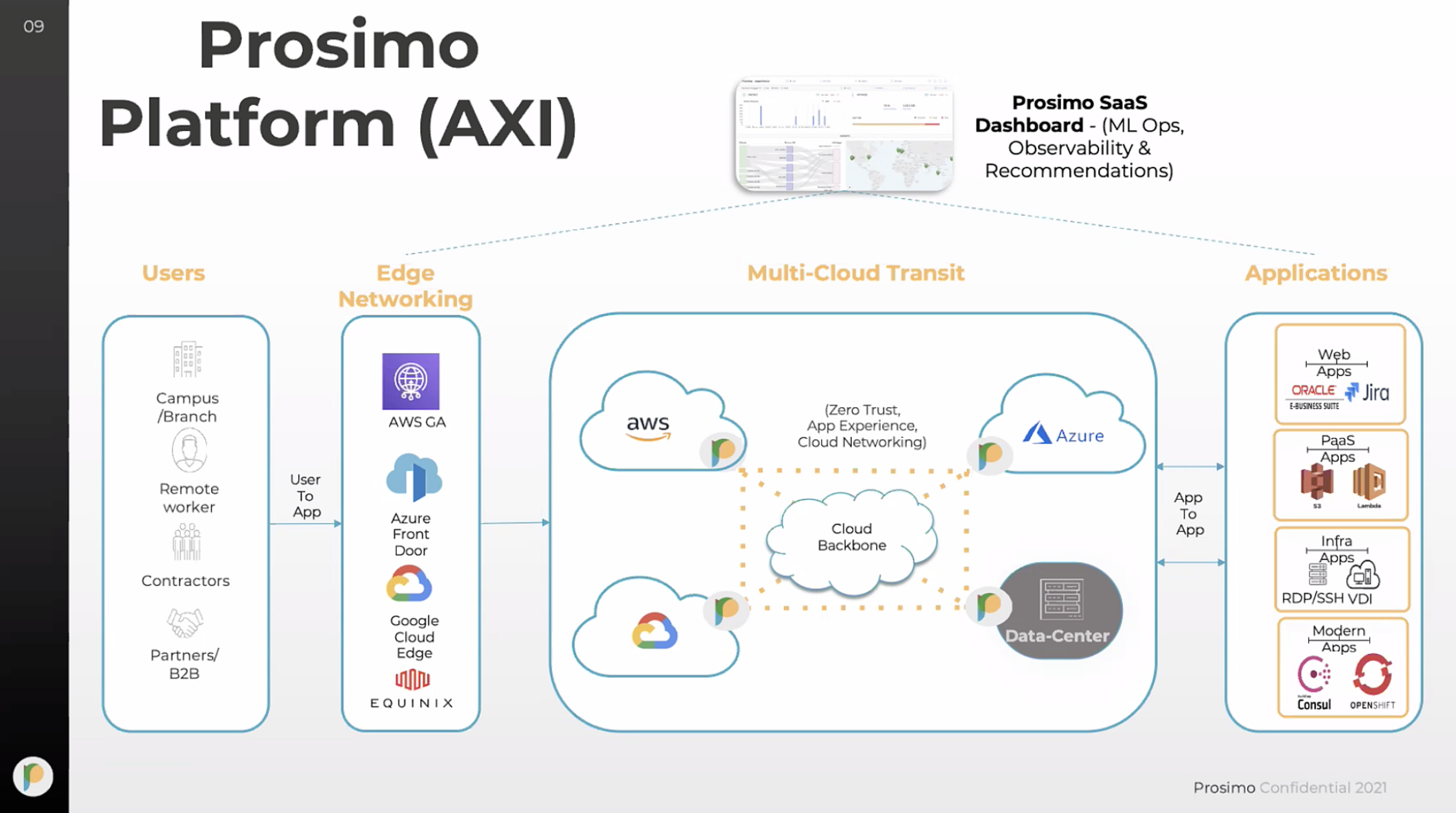
To get to the good stuff… Prosimo focuses on multicloud transit (the third lozenge pictured above), an element between the users and edge networks and the applications a customer has in any of the three major clouds or their own datacenters/private clouds.
Disclosure: I work with Flexpool.io but I am not writing in any official capacity or with any proprietary knowledge. You should mine with Flexpool, but it’s not mandatory.
Disclaimer: Hashrate rental can be expensive and unprofitable if you don’t know what you’re doing. If you do know what you’re doing and can manage your risk, check out Nicehash and MiningRigRentals and maybe you too can embarrass the tech media. (Referral links may earn me a little bit.)
This morning, some “news” pieces came out in some of the tech press. Not the big names most people have heard of, but venues with some reach and some expectation of basic knowledge.
The headline from notebookcheck dot net
The “story” was that some unreleased and possibly even non-existent GPUs were mining to Flexpool, the number 5 Ethereum mining pool in the world This sounds pretty amazing, even unbelievable, although after the April 1, 2021 Captains Workspace reveal video on the “RTX 4090” you realize some people will believe anything.
The evidence? High hashrate and workers named “4090TI-Overclock-Test,” “RX7000-Control-Test,” and “RX7000-Overclock-Test.”
A couple of these mention later in the article, after breathless references to the scale and/or specs of the cards named and the vast amounts of Ethereum that could be mined by these farms, that it’s unlikely.
Today’s post comes with apologies to my international readers, especially my esteemed non-US Tech Field Day colleagues, who may or may not benefit from today’s quick take that ended up not being so quick again.
As my American readers will know, there are monthly expenditures that are painful and rarely decrease over time.
Some, like apartment rent and self storage, are downright predatory by design–try getting the advertised new tenant rate when you’ve lived in an apartment for a year or more. If you’re lucky, they’ll let you move into a different apartment, pay overlapping rent during the move, put a new deposit down and wait a month or two for the old one to be returned, and then get something close to the advertised rates. And in a recent self-storage experience, I was given two choices on upgrading a storage space: Pay full price (and expect a rent hike within 2-3 months of course), or get the advertised price for the new space as long as I paid full price for the old (soon-to-be-empty) space for three full months.
It’s not all bad though
But you can find unexpected opportunities to save, especially (in my experience) with cable companies, who have a suboptimal reputation when it comes to customer service. Some cellular providers can also work this way, although it can be a bit rougher.
It helps to do some homework first, so here’s what I’d suggest you do.
If you’ve been around for a while, you will know that POHO, or Psycho Overkill Home Office, is an ongoing theme of this blog. I’ve described it more than twice as “two comma technology on a one comma budget.” It stands to reason that my home network is in the “psycho overkill” range, with three sites connected by VPNs and internal 10 gigabit networking (40 gigabit on its way).
Disclosure: Much of the gear in this post is Cisco Meraki, and much of that was obtained using employee purchase program benefits as a Cisco employee. As a system engineer I was eligible for free renewals on my licenses for the Meraki gear, but the original licenses and most of the hardware purchases were out of my own pocket. Any other gear mentioned was purchased out of my own pocket through mainstream methods (i.e. eBay) unless otherwise noted. Cisco has not reviewed, influenced, or endorsed this post or this blog, and they most likely won’t.
A photo before everything was recabled. There are a lot more ports in use now.
What’s the POHO like today?
In the past two years I’ve been running a somewhat crippled network, despite having pretty good employee purchase benefits at work. Still, with gigabit fiber and 500 megabit cable, I’m at about 2.5x the capacity of my core router.
I’m running a Meraki MX84 as the core of my home network, with AT&T / Sonic fiber as primary, and Comcast as secondary. It downlinks to an MS42p 48-port switch with four ports of 10 Gigabit Ethernet. On the upstream side, it connects via Meraki’s auto-vpn to an MX64 in my shop across town, and to a Z1 Teleworker unit in my garage that keeps some lab gear protected from the world (and simplifies IP addressing).
I have a couple of MS switches around the networks, as well as a Cisco Small Business SG500XG-8F8T, a Netgear MS510TXPP (for mgig POE) and a couple of other brands in use from time to time. Wireless is handled by MR56 and MR34 in the house, MR18 in the garage, and MR16 in the shop.
Unfortunately, the MX84 is limited to 500mbps of stateful firewall or 320mbps of advanced security throughput. I’m getting pretty close to that, but the other half of the uplink is idle unless I switch over to the other side of the MX.
In January 2021, I refreshed my involvement with cryptocurrency mining, after two years of Ronco-mode Ethereum mining. Set it and forget it worked pretty well, except when a power supply died.
I started a post then, and had told some friends about my calculations for Ethereum mining with the new 30-series from NVIDIA or even my old RX580 cards. A $1500 rig that could pay for itself in six months? Amazing.



 rsts11 - Robert Novak on system administration