Some upcoming events worth a look

I haven’t been to my datacenter in over six months. I have a feeling the front desk folks at the Westin Casuarina are missing me by now. But I’m still on the move. Hopefully I’ll see some of you at one of the following events in the near future. 

VMworld US 2013

& Tech Field Day Roundtables at VMworld

This year’s VMworld is in San Francisco, just a 90-180 minute commute (each way) from where I live in Silicon Valley. Thanks to the gracious support of Gestalt IT’s Tech Field Day and the Tech Field Day Roundtable at VMworld sponsors, I’ll be camping in San Francisco and making the most of the opportunities during the week. 

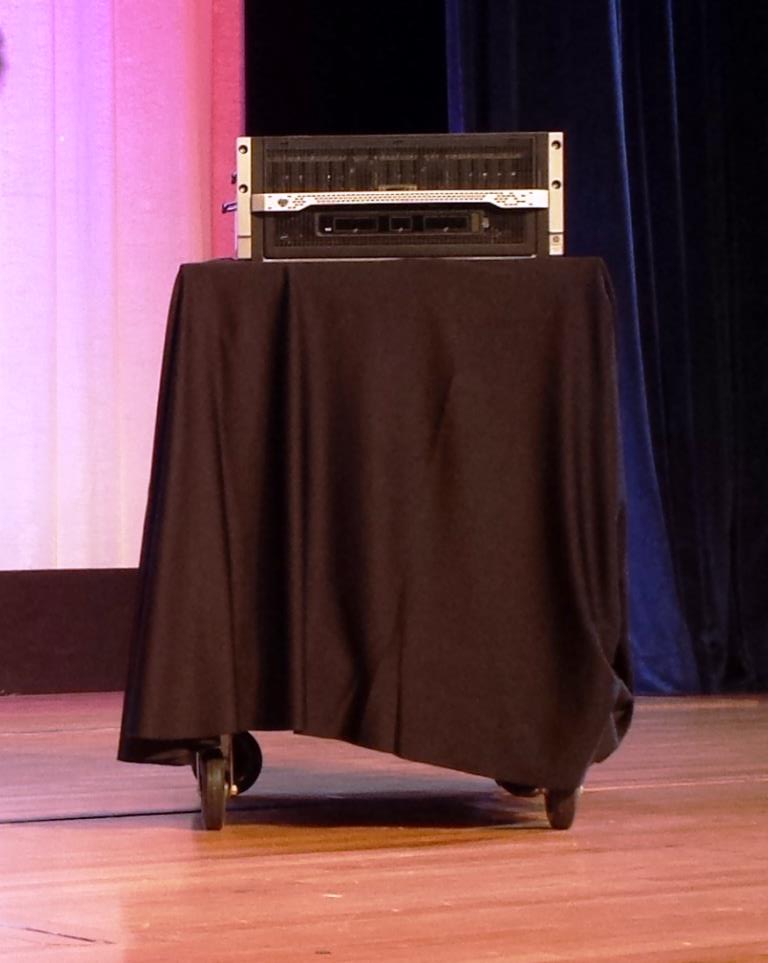
Along with a dozen and a half other Tech Field Day delegates, I’ll be meeting with our friends from Asigra, Commvault, Infinio, and Simplivity. I’ve been to TFD sessions with all but Simplivity, but I’ve met Gabriel Chapman (@bacon_is_king) at the SV VMUG so they’re not strangers to me either (even if their “cube” is actually not cubical). 

In addition to the vExpert and VMware customer events, I’ll also be visiting friends from past Tech Field Day meetings, including Scale Computing, Nutanix, Zerto, Pure Storage, and Tintri. If I’ve missed anyone, feel free to touch base. 

Software Defined Data Center Symposium

Gestalt IT is hosting a full day SDDC symposium at Techmart in Santa Clara, a mere 10-15 minute commute for me. There’s still room to join us on Tuesday, September 10th, for a day of discussions about SDDC topics, featuring Greg Ferro, Jim Duffy, Ivan Peplnjak, and several leading vendors in the field. The event will set you back a mere $25 and that includes lunch. 

The Cloudera Sessions

This one actually has nothing to do with Gestalt IT, but if you’re deep into Hadoop, and Cloudera’s particular flavor of it, it’s definitely worth a visit. Cloudera hosts The Cloudera Sessions in cities around the United States, and I’ll be attending the San Francisco event on September 11th.

Several Cloudera technologists, from the system engineering manager to the co-founder/CTO will be talking about where the company is going and where Hadoop is going in the foreseeable future. This event will set you back $149, but if you are a current Cloudera customer, check with your account manager to see if you can get a discount. 

BayLISA At Joyent

The October 17 meeting of BayLISA, Silicon Valley and the San Francisco Bay Area’s oldest system administration group will be held in San Francisco at the headquarters of one of the most prominent Solaris technology companies, Joyent. We’re looking forward to hearing from Brendan Gregg about his new book, Systems Performance: Enterprise and the Cloud, as well as getting an update on Joyent’s Manta storage service.

Attendance is free, but space is limited. RSVP at the BayLISA Meetup site if you’re interested. 

IEEE Computer Society’s Rock Stars Of Big Data

As much as I hate the use of the term “rock stars” (since that’s not necessarily a compliment or a good thing), this event looks interesting. I’m not sure how useful it will be for technologists, but it’s worth a look. IEEE Computer Society is hosting their Rock Stars Of Big Data event at the Computer History Museum in Mountain View on October 29th. It will set you back $239 as an IEEECS member, or $299 without membership. Group discounts are available for registration of 3 or more people on one ticket. 

Mickey’s Not So Scary Halloween Party

Everyone deserves a bit of a break, and big data can wear a technologist out…. If you’re planning to be at the Magic Kingdom between September 10 and November 1, you should check out the Mickey’s Not So Scary Halloween Party. I went two years ago and it was pretty enjoyable. I do work for the Mouse, but I don’t get any benefit if you go. So I highly recommend it. 


Traveling with too much stuff?

I’ve been traveling a lot this spring/summer. There are a couple of things I’ve come up with that really help me travel more efficiently, or make the most of overpacking at least.

If you have tricks of the travel trade to add to this list, please join in on the comments below.

Too Much Stuff To Take?

Planning to buy more souvenirs than your suitcase will hold?

If you’re traveling light on the way, get nested suitcases and pack for the trip in the smaller one. This probably only works if you get free checked bags, or if you don’t mind the $50-75 extra charge, but it depends on what you’re buying.

Whether you’re traveling light or heavy, get a couple of flat rate shipping boxes from your US Post Office, and buy the postage in advance (you can print a label with postage at usps.com for a discounted rate off “retail”). Then when you’re packing up to go home, put the souvenirs in the flat rate boxes and leave them at the resort front desk for mailing back. You’ll wait a couple of days for delivery, but it’s better than dragging all those coffee mugs and other heavy or bulky items home.

(Drop) Ship It!

The Priority Mail trick also works if you want to ship something there. I once sent my brother’s and my niece’s birthday presents to Disney’s Wilderness Lodge Resort 3 days in advance of my trip, so I wouldn’t forget them and wouldn’t have to pack them and risk over-weight fees on my luggage (a few meals at Whispering Canyon and Boma and I had to risk over-weight fees on myself, of course).

Another space saver that I recommend if you can plan ahead and/or have Amazon Prime. You can have Amazon (and probably many other web retailers for that matter) ship to a third party address. So if you need things like coffee, diapers, non-perishable food items, clothing, a new laptop, etc…, you can order them online to be shipped to your hotel.

Create a new ship-to address and put “Guest Arriving X/X” on one of the address lines, and check with the front desk when Amazon notifies you of delivery.

Suck it up!

You probably won’t take a vacuum cleaner with you, but Space Bags, or their poor cousins zipper bags, are great for compressing clothing and waterproofing your non-wet stuff if your swimsuit, bath puffs, etc don’t dry before you leave.

I found that the genuine Space Bags roll-up varieties, the ones you don’t need a vacuum for, tended to last 2 or 3 trips before they died. So I started cheaping out and getting 2.5 gallon Ziploc brand zipper bags. They now have even larger ones that can be used to pack pillows, blankets, snowmobile suits, whatever you need to get the air out of.

Trade Shows Sometimes Give Away Shirts

I usually forget about this until I get an entire jumbo messenger bag full of tee shirts, but if you’re going to a trade show or technical convention, you’re probably going to be offered more tee shirts than you can use. If you can get away with wearing tee shirts at the event, you can probably get by with one or two shirts.

And if it doesn’t offend your sensibilities, you can save some space on the way home by getting shirts in a size for the smaller life forms at home.

Disposable What?

This isn’t always green, but if nobody on your trip is going to be seeing your underwear or bath puffs or socks, you can take the ones your spouse wants you to throw away, wear them one last time, and then throw them away. I tend to do this with bath puffs, since only one of the last dozen hotels I’ve stayed in provides a puff, and that one only did it once.

An alternative, if you can do a quick batch of laundry before taking off, is to donate non-unmentionables to a local thrift shop or charity. Backpacks, bags, and some other trinkets from trade shows can probably find a better home than the box your spouse keeps offering to help you throw away.

Rough cut: HP Moonshot and CEO Meg Whitman at Nth Symposium 2013

I gotta say the withdrawal symptoms from daily Disneyland visits are getting milder, but I’m home from a week in Anaheim for HP Storage Tech Day  and Nth Generation’s 13th Symposium. If you didn’t see it, my preview was posted last month here on rsts11.

I’ll have some more detailed thoughts, including at least one topic that I hadn’t really expected to provoke so much thought, in the next few days. But I wanted to touch on two of the highlights from the Symposium while they’re fresh in my mind.

Disclaimer: Travel to HP Storage Tech Day/Nth Generation Symposium was paid for by HP; however, no monetary compensation is expected nor received for the content that is written in this blog.

Quick Overview of Nth Symposium

Nth Symposium is an annual partner and customer summit held by Nth Generation, the leading HP channel partner in southern California. They’ve done this thirteen times now, bringing customer technologists and executives together with HP and partner representatives for a very productive event. It’s free to qualified IT professionals, so I’d suggest checking it out next year if you are in the area.

Two of the three Nth Symposium keynotes were by execs I’ve worked for before. I was farther down the org chart from (now HP CEO) Meg Whitman when I was at the shopping.com division of eBay in 2006, but she gave the executive welcome at my new hire orientation. I reported to a VP at 3PAR who reported directly to (now HP Storage VP/GM) David Scott back in 2001. I knew both would be very impressive speakers for a keynote.

HP CEO Meg Whitman
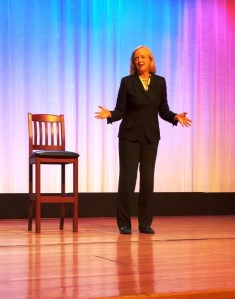
HP CEO Meg Whitman (not channeling Clint Eastwood, don't worry)

HP CEO Meg Whitman (not channeling Clint Eastwood, don’t worry)

In a definite score for Nth Generation, they convinced Meg Whitman, president and CEO of HP, to give the headline keynote at this year’s symposium.

Whitman’s ability to know on a detailed level, communicate, and see the path forward for a hugely disparate business that probably seems like it’s going that-a-way at full speed in every direction is impressive.

The high level overview of the company’s direction, and the “New Style of IT,”  was to be expected, but her willingness and ability to field unstaged questions from the audience and respond to them in an honest and aware way was what really impressed me.

“Don’t be shy, remember, I ran for public office.”
–Meg Whitman

The three questions I remember involved cross-border ordering and SKU simplification (so that you can easily order the same model for delivery to multiple countries), support cohesiveness and contactability (and responsibility), and the morass that is hp.com.

Fellow blogger John Obeto was set up for a question when Meg called out Nigeria as one of the countries that would not see SKU simplification this year. But she acknowledged that the complexity was counterproductive, and that the company is already working to solve the problems for multinational customers.

Another attendee mentioned the challenges of finding the right contact for support, especially (as I recall) when multiple product lines are involved, or when your contacts at HP leave the company. Having had my HP account manager leave after my first order a couple of jobs ago, and having had her replacements actively and effectively lose my followup business in the months that followed, I know what a pain this can be.

Meg acknowledged the problem as a significant one, suggested using a partner or VAR as an aggregator for contacts within HP (since VARs would have more access to experts and resources within the HP organization), and concluded by offering her personal email address and committing to help until other paths are finalized.

But back to John, who came up to the microphone to decry the exclusion of Nigeria for the 2013 SKU project, and to mention something that probably everyone who has tried to used the HP site for anything but B2C e-commerce already knows… that hp.com is pretty difficult to navigate. Meg once again acknowledged the problem–see a pattern here?–and said that they were working on the business-to-business (B2B) and business-to-consumer (B2C) sites separately. One is already under a substantial reorganization, and the other will follow as soon as practical.

In general, I got the sense of Meg Whitman as a CEO being not entirely unlike the (parody) President Jimmy Carter’s fireside chat from Saturday Night Live in the late 70s. I wouldn’t ask her about acid experiences, but it seemed if you asked her about something even several levels down in the chain that was affecting customers, she’d know what was going on and be able to respond to it (or be willing to take the question on and find an answer).

The Moonshot heard round the worldnth moonshot on stage

On the topic of hp.com, Paul Santeler put further time into the discussion of Moonshot in the talk that followed Meg’s keynote, but as I recall Meg also made the bullet point on Moonshot that hp.com now runs on Moonshot rather than a huge farm of servers.

To be specific, they’re using about 720 watts of power to run the whole site. Think about that… as she suggested, you probably use more power on lighting in your home than they do to run a large enterprise web site with support, e-commerce, marketing, and all sorts of other content. (Unless you’ve gone green–I think I’m at a bit under 700W between all the lighting in my home thanks to CFL bulbs, but steady-state power rating for these power supplies is 653W so they win.)

Moonshot is a sub-5U chassis that contains up to 45 server “cartridges” running the Intel Atom S1260 at 2GHz. The cartridge is a bit larger than a Kindle Fire and sports an 8GB ECC dimm, dual gigabit Ethernet (through a central switching module pair), and a single 2.5″ laptop-style hard drive that can be 500GB or 1TB of 7200rpm spinning disk a 200GB MLC SSD.

The 45G switching modules live in the center of the chassis, and the two 6SFP uplink modules give 6 1GBE/10GBE uplinks each via SFP+ connectors. Standard configuration gives you one switch module and one uplink module; the redundancy option is a custom configuration. A 40GBE module is coming soon. The systems are managed via iLO Chassis Management, and multiple systems can be daisy-chained.

If you’d seen the Seamicro systems circa 2009-2010, the Moonshot will seem like at least an evolutionary development from that concept. The first times I spoke with Seamicro about their 10U chassis, I asked about a smaller system, around 4U, with fewer than the stock 64 systems. Moonshot gives nearly the capacity of that 10U system, 40% more system RAM, dedicated per-system storage,  a third the footprint, and a lower power draw.

There are other cartridges coming, including an 8-core 32GB cassette (good for thin virtualization) and a DSP-targeted cassette (voice processing and so forth, running on ARM), so it shouldn’t be a one-trick pony platform. It won’t replace all rackmount and conventional blade servers, but hyperscale is likely to fill a few niches and simplify management and scalability.

So where do we go from here?

I’ve been a fan of 3PAR’s “Utility Storage” platform since I joined the company in 2001. (They’re now buzzwording around Polymorphic Storage which is also cool.)

One thing I asked about often during my time on Technology Drive in 2001-2002 was a smaller starting point for the InServ platform. With the E and F series, they made some steps in that direction, and I bought an E200 for high performance storage at Trulia a few years ago. But with their new 7200 model, they go even farther into the realm of possibility with a starting list price around $25k.

I’ll be bringing you some details on their platform and enhancements in the next week. I’ll also be looking at the comparison between utility computing platforms from HP and Cisco, a topic that was featured in one of the second tier keynotes.

Stay tuned, and wish me luck on the recovery from convention plague if you don’t mind.

Getting a workflow together for mobile blogging #rsts11

So I’m headed for my fourth Tech Field Day event, and so far I’ve generally been more about the “real-time blogging” by way of twitter. But this time around, I’m going to try to more timely persistent posts.

This will also be my first time going with a laptop that weighs less than a typical newborn. But even with that transition, from the Sony VAIO quadcore to a ASUS Zenbook Prime dualcore, I’m wanting to make use of one of my tablets.

So I’m trying out a few different options. Today I’m using my Nook HD+ (Barnes&Noble is seriously cutting the prices on their HD & HD+ tablets, so I got the HD+ 32GB and added a 64G MicroSDXC). After realizing that the cool new wireless keyboard I had wouldn’t work with the tablet (as it wasn’t Bluetooth), I I found my old Apple Wireless Keyboard.

A fresh set of batteries and a $2 BlueKeyboard Pro app later, I’ve got a mobile blogging system with the Android WordPress client.


Update: I wrote this Saturday night in front of the television, and apparently the button I interpreted as “save” as in “save draft” was actually “publish.” So I will be updating this entry over the next couple of days–it wasn’t really ready to go out, but we’ll deal.

2013-08-23: A further edit… once I got out to Tech Field Day 9, my keyboard didn’t want to work with the Nook HD+. As I update this, I’m getting ready to head for VMworld in a day or two, and I am going to try the iPad with Apple keyboard (and I’m updating on this combination right now… seems to work fairly well even in my lap except for the Marware keyboard protector I’m trying out.

It’s pilgrim time, people… #vExpert #CLUS #TFD9 #rsts11

Got your best John Wayne voice in mind?

April showers bring May flowers, and what do Mayflowers bring?

Pilgrims.

vexpert-tint

First, I’m honored and (at least) a little bit surprised to have been chosen as a VMware vExpert this year. To be in the company of both Scott Lowes, and several hundred other people who contribute to the VMware community, well, it’s an amazing category to be in.

I applied under the Evangelist Path because, while I work for a company that has more than a few VMware licenses, this is a category I qualify for under my own auspices. And the blog entries you’ve read, linked to, and followed in your own labs have been out of my own pocket and without benefit of a Fortune 100 company’s sway or budget.

Thanks to some of the benefits of the vExpert program, I expect to be able to expand my home lab and work on some new projects in the coming year, meet lots of new friends and cohorts, and contribute more of another voice to the VMware community. Although I suppose this means I should follow the recommended capitalization of VMware more consistently.

TFD-Logo-300

Speaking of pilgrims, I’ll be making a pilgrimage to Austin, Texas in just over three weeks to be a part of the All-Star All-Datacenter Tech Field Day 9. I know over half of the other delegates, having participated with them on previous field day events, and am looking forward to maybe remembering all of their names by the end of the week.

This is my first field day outside of Silicon Valley (unless you count the roundtables at Interop last month), so it should be interesting to actually have to go more than a 15 minute drive to join the rest of the delegates.

Tune in June 19-21 for live coverage of our conversations with Dell, Nutanix, Solarwinds, Veeam, Neverfail, Commvault, and a top secret stealth company I’m not allowed to name yet.

Update! As of June 4th, Infinio has outed themselves as the “top secret stealth company.” They describe themselves as “inventor of downloadable storage performance” (and I assume that’s storage performance enhancement that’s downloadable rather than being hardware). Looking forward to seeing what their Infinio Accelerator is and how it compares to other things on the market that sound like software-layer virtualization storage enhancement.


cisco-live-250

And speaking of pilgrims even more, well, I’ll at least be in the neighborhood of my employer’s largest campus when I head down to Orlando after TFD9 for the Cisco Live event.

I’ve been heavily involved in Cisco UCS for the past year and change, and am looking forward to exposure to more about Cisco’s datacenter platforms as well as maybe touching on other areas of their business. I probably won’t be able to turn my Cisco 1605R routers into SDN gear anytime soon, but I’ll survive.

Balancing-Act-001

And finally, as time permits I’m going to be evaluating and writing up a couple of SMB WAN load balancing solutions that have been introduced/enhanced recently. I had good conversations with two of the bigger names in SMB WAN aggregation and failover while at Interop earlier this month, and I’m looking forward to experimenting with some of their gear in the foreseeable future. You’ll probably see some of the names in my “How many Internets do you need?” post from March, and maybe a surprise or two if I’m lucky.

So stay tuned. And if there’s anything in the SMB (small/medium business) and/or POHU (psycho-overkill-home-user) market space you’re curious about, let me know and I’ll see if I can dig into it. Chime in on the comments below!