Unknown's avatar

About rsts11

Big data integrator/evangelist I suppose. Formerly a deep generalist sysadmin and team lead, still a coffee guru, and who knows what else...

Overkill on my morning coffee with Tonx

Some of you know I’m mildly obsessive about my coffee. I don’t hand-grind my coffee every day and I don’t own any coffee gear that costs more than a new-car car payment. But I like to make sure I have a consistent supply around, even when traveling, and sometimes I like to go out of my way for the experience.

I’ve brought in beans from Hawaii, Key West, local roasters, and occasionally local retail. I did this for my company two jobs ago, where the finance team got annoyed that a 2 pound bag of pre-ground Costco coffee didn’t last two weeks anymore. And I do it at home, of course.

The end justifies the beans

Earlier in June, I discovered the LA-based Tonx coffee service. They had a Father’s Day promo for a free Aeropress with subscription. I figured I’d give it a try, because you can never have enough Aeropresses. Ask Stephen Foskett.

Disclaimer: All the equipment and supplies in this post were purchased by me, out of my own pocket change, with no consideration given by Tonx or any other mentioned supplier or venue. Although I am hoping a few of you use my referral link so I can get a free Tonx t-shirt.
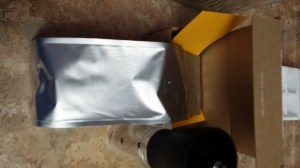
tonx-01-bag

12oz of Tonx coffee beans

Their subscription model gives you a an every-other-week shipment of either 12oz or 24oz of beans, freshly roasted in or around Los Angeles. It’s $19 and $34 per shipment, for 12oz or 24oz respectively, including shipping. You can also subscribe to a half sack (6oz for $12), and from Twitter it appears you can do a standard plus a half sack if you want something in the middle.

A bit pricy compared to grocery store or Cost Plus coffee, but competitive with boutique/specialty roasters when you take shipping into account.

Tonx roasted my shipment of Costa Rica “HELSAR DE ZARCERO” beans on June 16, and it arrived (along with the free Aeropress) while I was off in the land of heat and humidity (probably Austin at the time). When I got back, the little box with the beans and a newsletter were here, along with the Aeropress.

Introducing the dripper

tonx-03-grounds-dripper

Clever Coffee Dripper, 7T of ground coffee, and a tablespoon measure

The good folks at Red Rock Coffee in Mountain View do hand-dripped coffee for a slight premium, and when I worked next door to them, I’d go in once or twice a day for a hand-dripped coffee. They use the Clever Coffee Dripper, an twist on the typical Melitta or Hario V60 pourover funnel that you’ve probably used at some point in your life.

The difference between the Clever and a typical pourover is that your ground coffee soaks in the water for at least 4 minutes as a part of the brew cycle. You can bring out more of the flavor of your coffee this way, rather than rushing the water past the beans. When your coffee is steeping in the dripper, the stopper on the bottom is “down,” meaning that it’s closed. When you place the dripper on a cup, the rim of the cup pushes the stopper up, and the coffee flows gradually through the grounds to produce a richer flavor.

Another advantage of the Dripper over the Aeropress is that it requires a lot less arm strength first thing in the morning, since you’re only lifting the dripper, not pushing the plunger.

The Clever is available at Red Rock–if you’re in the area, go in and buy it there, and have Brendan or one of the other coffee gurus show you how it’s done. If you’re not local to Mountain View, you can either buy it on Amazon or order from Sweet Maria’s in Berkeley.

Let’s brew this thing

tonx-02-millSupplies:

  • Hario MSS-1B hand-crank grinder (or not… keep reading)
  • Clever Coffee Dripper
  • #4 funnel-style paper filter (white or natural)
  • Beans!
  • A 1T measure and a stirring stick (wood, plastic, a small spoon if nothing else is available)
  • A timer, or an eye on a clock.

My process

Grind a MSS-1B worth of beans by hand. Rough estimate suggests that this was 600 cranks of the hand crank on the grinder, and a sore left hand from holding the grinder. Result is about 7T of ground coffee, which was dumped into a finger bowl for measuring.

Heat filtered water (12oz plus a bit to rinse the filter) to almost boiling.

Put one filter into the Clever, douse it with hot water and drain, then add 2T coffee per 6oz water. In this case, 4T coffee is used for 12oz water.

tonx-04-dripper-timer

Timing the first phase of brew. 2 minutes, stir, 2 minutes, stir, release.

Pour hot water slowly over the grounds in the filter, making sure to douse all the grounds first. I let the grounds bloom a little bit before adding the rest of the water, although this is not strictly necessary.

When all the water is poured into the filter, put the cover on the dripper and start a 2 minute timer. After 2 minutes, gently stir the water and coffee with your stirring stick. Replace the cover and start another 2 minutes on the timer.

After your 4 minutes and change are done, stir one more time and then put the dripper on a mug. It will probably take at least 3 minutes to fully drain, maybe more, but be patient.

tonx-05-dripped-coffee

The end result. Darker than expected, due to finer grind than intended.

Finally, after about 20 minutes of the ritual, you’re ready to try your coffee. If, like me, you adulterate your coffee, try each new variety without sweetener or lightener. you may still adulterate it afterward, but at least you get a feel for what your beans result in.

So how were those beans?

In a word or two, pretty good.

This shipment was Helsar de Zarcero from Costa Rica. A mild roast that one blog described as “Medium, creamy body. Fresh blackberry aroma & mellow acidity. Finishing with honeycomb sweetness.”

I made one critical “mistake” in the preparation of this coffee. The Hario hand mill grinds a very fine grind, but for Clever you should generally use a coarser grind–one person I read suggested a rock salt texture, and if you’re having a professional grind your beans, ask for press pot or French press coarseness.

Still, despite the grind being very small and thus taking longer to get through the filter as the coffee bonded… I got a dark but not overwhelming brew out of the coffee. The paper filter keeps your coffee from being silty, and it came out creamy and not too acidic, as expected.

A spoon of turbinado sugar brought out a bitter tone, as I’m sure any coffee so insulted would show. A bit of half-and-half calmed it down, and I was back to my usual level of adulteration. A very smooth sipping coffee.

I had 3T of coffee left, so I brewed it in my Black & Decker 16oz pod/ground brewer with 9oz of water. This is a brewer that does wonders with coffee pods, but as a basket drip coffeemaker it didn’t really do any justice to the Tonx beans.

So where do we go from here?

First, no more hand cranking of the mill for a while. I’ll run the rest of this batch, and probably future batches, through my Pro Line burr mill from KitchenAid. Most of the time I don’t need the full-on ritual, and I do need the use of my arms.

Second, I do think I’ll keep my Tonx subscription for a while. They’re roasting my next shipment, a Valiente from Santa Ana, El Salvador, today. I should have it by the end of the week and I’ll try to comment on it when I try it.

Check them out — if you use this link, I’ll get points toward something or other, and maybe a t-shirt. They’re on twitter @tonxcoffee and elsewhere as well.

Third, I’ll probably try the Costa Rican beans in an Aeropress this week. My fiancee hides my “spare” coffee equipment in baskets on the top of our kitchen cabinets, so I’ll have to go climbing to find one that’s not new in box. As mentioned, I prefer to do Aeropress when I’m awake, as it can require a lot of pressure to brew. But it’s worth the effort, and it’s easier to travel with than Clever (although a medium handy box from Target or a hardware store can protect the Clever very well).

Disclaimer redux: All the equipment and supplies in this post were purchased by me, out of my own pocket change, with no consideration given by any supplier or venue. Links may be affiliate referrals that help pay for my coffee  habit and other adventures, and your use of them is appreciated.

What about you? Have you tried Tonx or any other specialty/micro roasters? Or have suggestions on my coffee gear and methods? Feel free to chime in on the comments below.

Getting a workflow together for mobile blogging #rsts11

So I’m headed for my fourth Tech Field Day event, and so far I’ve generally been more about the “real-time blogging” by way of twitter. But this time around, I’m going to try to more timely persistent posts.

This will also be my first time going with a laptop that weighs less than a typical newborn. But even with that transition, from the Sony VAIO quadcore to a ASUS Zenbook Prime dualcore, I’m wanting to make use of one of my tablets.

So I’m trying out a few different options. Today I’m using my Nook HD+ (Barnes&Noble is seriously cutting the prices on their HD & HD+ tablets, so I got the HD+ 32GB and added a 64G MicroSDXC). After realizing that the cool new wireless keyboard I had wouldn’t work with the tablet (as it wasn’t Bluetooth), I I found my old Apple Wireless Keyboard.

A fresh set of batteries and a $2 BlueKeyboard Pro app later, I’ve got a mobile blogging system with the Android WordPress client.


Update: I wrote this Saturday night in front of the television, and apparently the button I interpreted as “save” as in “save draft” was actually “publish.” So I will be updating this entry over the next couple of days–it wasn’t really ready to go out, but we’ll deal.

2013-08-23: A further edit… once I got out to Tech Field Day 9, my keyboard didn’t want to work with the Nook HD+. As I update this, I’m getting ready to head for VMworld in a day or two, and I am going to try the iPad with Apple keyboard (and I’m updating on this combination right now… seems to work fairly well even in my lap except for the Marware keyboard protector I’m trying out.

It’s pilgrim time, people… #vExpert #CLUS #TFD9 #rsts11

Got your best John Wayne voice in mind?

April showers bring May flowers, and what do Mayflowers bring?

Pilgrims.

vexpert-tint

First, I’m honored and (at least) a little bit surprised to have been chosen as a VMware vExpert this year. To be in the company of both Scott Lowes, and several hundred other people who contribute to the VMware community, well, it’s an amazing category to be in.

I applied under the Evangelist Path because, while I work for a company that has more than a few VMware licenses, this is a category I qualify for under my own auspices. And the blog entries you’ve read, linked to, and followed in your own labs have been out of my own pocket and without benefit of a Fortune 100 company’s sway or budget.

Thanks to some of the benefits of the vExpert program, I expect to be able to expand my home lab and work on some new projects in the coming year, meet lots of new friends and cohorts, and contribute more of another voice to the VMware community. Although I suppose this means I should follow the recommended capitalization of VMware more consistently.

TFD-Logo-300

Speaking of pilgrims, I’ll be making a pilgrimage to Austin, Texas in just over three weeks to be a part of the All-Star All-Datacenter Tech Field Day 9. I know over half of the other delegates, having participated with them on previous field day events, and am looking forward to maybe remembering all of their names by the end of the week.

This is my first field day outside of Silicon Valley (unless you count the roundtables at Interop last month), so it should be interesting to actually have to go more than a 15 minute drive to join the rest of the delegates.

Tune in June 19-21 for live coverage of our conversations with Dell, Nutanix, Solarwinds, Veeam, Neverfail, Commvault, and a top secret stealth company I’m not allowed to name yet.

Update! As of June 4th, Infinio has outed themselves as the “top secret stealth company.” They describe themselves as “inventor of downloadable storage performance” (and I assume that’s storage performance enhancement that’s downloadable rather than being hardware). Looking forward to seeing what their Infinio Accelerator is and how it compares to other things on the market that sound like software-layer virtualization storage enhancement.


cisco-live-250

And speaking of pilgrims even more, well, I’ll at least be in the neighborhood of my employer’s largest campus when I head down to Orlando after TFD9 for the Cisco Live event.

I’ve been heavily involved in Cisco UCS for the past year and change, and am looking forward to exposure to more about Cisco’s datacenter platforms as well as maybe touching on other areas of their business. I probably won’t be able to turn my Cisco 1605R routers into SDN gear anytime soon, but I’ll survive.

Balancing-Act-001

And finally, as time permits I’m going to be evaluating and writing up a couple of SMB WAN load balancing solutions that have been introduced/enhanced recently. I had good conversations with two of the bigger names in SMB WAN aggregation and failover while at Interop earlier this month, and I’m looking forward to experimenting with some of their gear in the foreseeable future. You’ll probably see some of the names in my “How many Internets do you need?” post from March, and maybe a surprise or two if I’m lucky.

So stay tuned. And if there’s anything in the SMB (small/medium business) and/or POHU (psycho-overkill-home-user) market space you’re curious about, let me know and I’ll see if I can dig into it. Chime in on the comments below!

Mohs’ law and big data (Hadoop is hard)

I’ve spent more time than usual the past two weeks talking with people, and listening to people, about Hadoop. I’ve been administering Hadoop clusters for (part of) a living for about 4-5 years now, and I’ve gotten pretty good at answering questions people don’t have, or want, answers for.

In the past week or so I’ve heard one vendor advocate that Hadoop gives you a free analytics environment with no need for expensive developers since it’s free software, and another vendor advocated that you can just virtualize Hadoop by putting lots of  datanodes on a single host and save lots of money. Easy peasy, right?

no-just-no

 I’m proposing we consider Mohs’ Law in this situation.

No, I’m not misspelling Moore’s Law, which tells us that compute power/efficiency will double every 24 months. I’m suggesting a law that’s more of a diamond in the rough, if you don’t mind.

Hadoop is hard. 

 It’s based on Friedrich Mohs developing a method of describing hardness of materials about 200 years ago. And it’s a great pun. But it’s also a reminder that “yum install” does not a production application make.

But Rob, I can get Hadoop in 15 minutes!

yellow-hadoop

It is pretty easy to get started with Hadoop. It’s even free of charge to get started (or even to go into production) with the platform itself. I recommend it. Go do it now. I’ll wait.

For starters, go grab the Cloudera QuickStart VM or the Hortonworks Sandbox VM from their respective websites. Pull it into your desktop virtualization platform of choice. Look at the docs. Run some of the tests. At that point you’re farther along than most people who promote Hadoop.

But at that point you don’t have a functioning business intelligence/data warehouse/analytics application environment, any more than installing Ubuntu 13.04 into VirtualBox gives you a production e-commerce site.

There’s still a lot of work to be done. Some of it is difficult, but a fair bit of it is just downright hard. Understand what you want to do, what data you can pull into your environment. Figure out what your customers/users/analysts need out of the data. Make sure you can validate the output. Automate all your tests. Go back to your data sources and make sure you’re getting all the data. Go back to your end users and make sure you’re giving them what they want. Lather, rinse, repeat.

Rob’s Corollaries to Mohs’ Law

If you remember nothing else, think about an analytics environment the way you would a monitoring environment. I’ve supported both for almost a decade, and the take-home I’ll save you ten years on is this:

Make sure you’re measuring what you think you’re measuring.

Make sure you’re measuring what you need to be measuring.

This rule also applies to a lot of other technology… customer surveys, dating sites, and so forth. But it takes formidable effort to get these two corollaries right (without coronaries), and even if you do throw together something with Insta-analytics.com (probably not a real site, not meant as an endorsement), they won’t be able to tell you what you need or whether you’re getting it.

So where do we go from here?

First of all, if you’re interested in getting familiar with Hadoop, go grab a VM above and give it a try. Simulate Pi Indiana-style. Grab a book and try some of the stuff it suggests.

Then, go talk to the BI team in your company, or the analyst who does performance dashboards when she’s not writing code and designing employee event signage and chasing your kids out of the server closet, or whoever. Find out what they’re doing.

And finally, unless your vendor makes its livelihood supporting Hadoop, don’t take their take on Hadoop as gospel. Apocrypha maybe, mistranslation at worst, and probably not enough to go on.

Hey, I’m in Silicon Valley and want to learn more, what can I do?

Funny you should ask.

BayLISA is hosting a Hadoop meeting on Thursday, May 16, at Yahoo! in Sunnyvale. There’s a waiting list but it usually fades closer to the event. Come see Alan Gates of Hortonworks, Eric Sammer of Cloudera, and Ryan Orban of Nutanix talking about Hadoop innovations and how to get involved.  (Disclaimer: I am president of BayLISA, but I don’t get any profit or direct benefit if people come to the meetups.)

There’s also a Hadoop User Group meetup on Wednesday, May 15, although it’s a bit more suited to advanced users who are already familiar with the technology. Their waitlist is also a fair bit longer. But check it out and see if it fits your needs.

If you’re not in Silicon Valley, check Meetup for local groups, or see if one of the Hadoop vendors has local meetings or events you can attend. If you find one, feel free to add it in the comments here so other people will know where to look.

I survived Interop

I made it back from my first Interop expedition. I’m sure a lot of you are finding my blog as a result of meeting me at Interop — I owe a few of you an email to follow up on our conversations, and those will be going out next week. Feel free to initiate contact if you like, leave a comment, drop me an email, or catch me on Twitter.

I’d like to take a moment to thank Stephen Foskett and the Tech Field Day organization for faciliatating my Interop visit, as well as Spirent, NEC Networking, and Juniper Networks for sponsoring our activities and presence this week.  I’d also like to thank Jennifer “JJ” Jessup, General Manager of Interop, for her help dealing with an interesting PR contact before the event, and Jamie Porter from the UBM/Interop PR team for helping to set up a couple of meetings with exhibitors while I was there.

2013-05-09 12.05.40I met a  lot of interesting vendors, found some products and technologies to dig into more over the next couple of months, and managed to catch up on my email. There will be a couple more blog entries coming this month, but oddly one of the most impressive things I saw at Interop was that a couple of my babies were running in the core of the network.

From 1997 to 2000, I worked as the sysadmin for what used to be called Rapid City Communications. They brought out an Accelar line of routing switches with Gigabit Ethernet, got acquired by Bay networks, got acquired by Nortel Networks, and somewhere along the line converted to the Passport naming structure with the 8000 line of chassis switches. The picture to the right is the descendant of the 8606, which I probably built code for tens of thousands of times.

The Avaya fellow I spoke with came from Bay Networks… Avaya acquired Bay/Nortel’s Ethernet Routing Switch product line in 2009. Even if 10/100 with two 1GBE ports doesn’t seem that powerful anymore, and even if Nortel (and now Avaya) have had 10GBE for 12 years on the ERS8600 line, I still have a soft spot for the whole Accelar line, and always love seeing them turn up in places like the Tech Museum in San Jose and now Interop in Las Vegas.

Stay tuned for some further thoughts and experiments with WAN load balancing, Hadoop grumblings, and some interesting consumer tech that I’m expecting to try out in the foreseeable future. Thanks for dropping by.