The Endpoint Justifies The Veeam: New free “personal” backup product coming soon

Apologies to Sondheim and Lapine for the updated title on this article.

Veeam announced their “Endpoint Backup FREE” product in the wee hours of the morning Wednesday, as about a thousand attendeees of the first-ever VeeamON user conference were still recovering from the event party at LIGHT nightclub in Las Vegas. More on VeeamON in another post later… but let’s get back to the new product for now.

Nope, this isn’t a hangover. Veeam, a leader in virtual machine backup/recovery and disaster recovery technology, is stepping out of the virtual world to allow you to back up bare metal systems. From early comments, this has been a long-awaited feature.

Veeam Endpoint Backup FREE

Endpoint Backup FREE is a standalone software package targeted at IT professionals and technophiles for use on standalone systems with local or networked storage. It should fit into anyone’s budget, and with flash drives and external USB drives coming down in price, none of us should have an excuse not to back up our personal laptops and desktops anymore (I’m talking to me here).

eblog5_thumb advanced recovery disk

Veeam offers an “Advanced Recovery Disk” that enables you to do a bare metal restore to a point in time. With some products you can restore from a backup image to a new disk or replacement computer, but you have to install and patch your OS from scratch first. Other products may limit you to local storage, or require driver alchemy, but with the Endpoint Backup recovery disk, you can boot from it (i.e. USB flash drive or optical media) and restore your full system image from a network share on your LAN.

Hey, can I back up a million Windows Servers with this product?

grumpy-cat

No, you can’t, and you shouldn’t.

Veeam are using a specific term in the product name–endpoint–to distinguish this offering from a bare metal server backup product. While it runs on Windows Server 2008 and later (as well as Windows 7 and later on the desktop side), it is being developed as a client OS backup solution. It does not have any central control or client management functionality, as it is a standalone program. This model doesn’t really scale for a large number of systems.

However, if you’ve virtualized all but two or three servers in your environment, or if you run a small number of physical servers in a home lab, this can cover that gap without having to license an additional enterprise product for a small number of legacy servers. You can even use a Veeam infrastructure as your backup target, whether backing up Windows Server or the standard desktop offerings.

Also, at this time Veeam does not support mobile devices (iOS, Android, Windows Phone, Sybian, Tizen, etc) so it is not a universal endpoint solution. You’ll want to either use your platform’s cloud option or something like Lookout or a carrier-specific app to back up your tablets and phones.

What are the downsides to this new product?

Well, the main thing for me personally is this (courtesy of Rick Vanover’s vBrownBag talk this morning):

Veeam Not Yet

It’s not available yet. Veeam employees are doing an alpha test now. A public beta is expected in November, with general availability (GA) offering in early 2015. However, for me it’s not that bad as it will take me a couple more weeks to have any free time, so for once I can probably wait patiently.

Another thing, which will probably affect a few of my readers:

no macs

That’s right, no Macs. At launch, and for the foreseeable future, Endpoint Backup FREE will only support Windows systems. Today there is no Linux or Mac OS X support. You can of course back up the Windows VM on your Mac with this product, but you’d have to use one of the server products to back up Linux, and if customers request Mac OS X support enough, they will likely consider it down the road.

And a fifth thing, that builds on the previous item:

Windows_me_logo

For reasons that should be obvious, Veeam has chosen to support only current Windows OS revisions. Windows 7 and later and Windows Server 2008 and later will be supported.

XP is out of service, and Vista is, well, Vista. Windows Server 2003 goes out of service next year. So for most users this will not be a major hindrance, but if your home lab has a lot of old Windows OSes, the Endpoint Backup FREE product will probably not fit your needs. And you should use this as an excuse to start upgrading (as if you needed any more reasons).

So where do we go from here?

It’s going to be an interesting year coming up, in the PC backup world. Veeam has a long history of free products, going back to their first product, FastSCP from 2006. Many technologically savvy end users will probably try out the new offering and then be tempted to check out Veeam’s other products if they haven’t already.

I wouldn’t be surprised to see this functionality integrated and expanded into a paid/enterprise grade offering in Veeam’s future, incorporating feedback from the beta and first production release of Endpoint Backup FREE. There’s some logic in expanding from there to supporting bare metal servers in a scalable way as well. If Veeam follows this path, the other big backup players may end up with a bit of heartburn.

You can sign up for the beta at go.veeam.com/endpoint and get notified when it’s available for download.

Disclosure: Veeam provided me with a complimentary media pass to attend VeeamON 2014. No other consideration was offered, and there was no requirement or request that I write about anything at the event. As always, any coverage you read here at rsts11 is because I found it interesting on its merits.

The cloudy nature of cloud and big data – with Gan Sharma at Asigra Summit

Last month, during a week off between jobs, I did what anyone would do on their vacation… I went to Canada for a software vendor’s partner summit.

What, you don’t do that sort of thing on your time off?

Well, the fine folks at Asigra invited me to attend their partner summit (disclosure: travel and accomodations were provided by Asigra) and, having been impressed with their technology and their history in the past, I accepted the invitation and made my first visit to Canada in about ten years.

First, the videos.

Gan Sharma, Asigra’s Director of Business Development, sat down with me before the event to talk about a couple of technological topics of broad interest, that both he and I are “a little bit obsessed with” (in my words). We had our friends at Prime Image Media, also known as the team behind Tech Field Day’s videos, there to record our conversations. I’m pleased to be able to share them with you here.

First, we talked about balancing the budget impact of backup and recovery with the risk factors of not having a backup and recovery strategy.

To be honest, backup and recovery can be a serious investment (some might call it a money pit, especially if it’s not planned and executed properly). But having to recover your data from pre-data-pipeline sources, or not being able to recover it, can be a far more financially draining experience.

Second, we talked about two very cloudy topics–“The Cloud” and “Big Data.”

One of the biggest sources of confusion, fear, uncertainty, and doubt around both The Cloud and Big Data is the lack of a clear and unassailable definition for either. As I mentioned, nobody has come up with one answer to what The Cloud is, or what Big Data is… because there isn’t exactly one complete and true answer.

But wait, there’s more… soon…

Stay tuned for another post or two around the Asigra Partner Summit. I need to write enough about the Partner Summit at least long enough to be able to not spell it “parnter” the first time I type it.


Disclosure:

I attended the 2014 Asigra Partner Summit at Asigra’s invitation, as an independent blogger, and the company paid for my travel and lodging to attend. I have not received any compensation for participating, nor have Asigra requested or required any particular coverage or content. Anything related on rsts11.com or in my twitter feed are my own thoughts and of my own motivation.


Introducing (and Expanding) the Asigra Cloud Backup Connector Appliance (from the Asigra Partner Summit)

As some of you know, I’m starting a new job soon working with software vendors integrating their products around Cisco platforms. While it’s not my day job yet, I’ve been pondering some less explored options to look into when I do get settled in.

This week I’m at the Asigra Partner Summit in Toronto, with my blogger/technologist hats on. I was a bit surprised to run into a Cisco 2900 ISR (Integrated Services Router) with a UCS E-Series blade module in it, in the hands-on-labs area of the Summit. For me, at least, it’s the unicorn of Cisco UCS; I’ve seen an E-Series system twice now, and once was in the Cisco booth at Cisco Live this year.

What’s this Cisco UCS E-Series all about?

284666[1]The Cisco UCS E-Series blade gives you a single Xeon E5 processor, three DIMM slots, 1-2 2.5″ form factor drives, a PCIe slot, and the manageability of standalone UCS servers without the infrastructure overhead that would be cost- and space-prohibitive in a single or dual node B-Series or C-Series deployment. It does not integrate with UCSM, although you can run multiple blades in an ISR. It’s an intriguing platform for remote office/branch office (ROBO) environments, with the capability to integrate your routing/switching/firewall/network services with your utility server needs, including backup and recovery.

But what’s it doing at the Asigra Partner Summit?

As it turns out, this “Asigra Cloud Backup Connector Appliance” deploys the Asigra Cloud Backup software with the ISR and E-Series platform. It makes sense, and while I wish I’d thought of it sooner, or they’d thought of it later, it is a pretty cool idea.

You can use the appliance as a standalone device, running Asigra DS-Client and DS-System software to collect and store your backups on internal storage. You can also use it as an aggregator or data collector running DS-Client, which would send the data to your DS-System server elsewhere (perhaps a standalone server on-site, or a datacenter or hosted vault).

The one catch is that you’re a bit limited on the internal storage. Cisco has certified 1TB SATA and 900GB 10K SAS drives for the E140DP blade, which means you’re capped at 2TB raw in the server. Asigra has incorporated deduplication in their backup software for over 20 years, so depending on your data you’ll probably see 8-10TB (or more) capacity, but you may still hit some limits.

How do we get around this capacity limit?

If you want to use your Cloud Backup Connector Appliance as a standalone service, I see two possible paths, but each has its drawbacks.

First, since the drive bays are standard 2.5 SATA form factor, you could install your own aftermarket 1.5TB or 2TB drives, doubling your capacity to 3-4TB raw. This means you’re managing your own disks though, and it could complicate Cisco support (although if you’re tearing into the gear you probably already know this and understand the risks).

Second, since you have a PCIe slot in the server, I could imagine either installing a PCIe flash card (such as the 3.2TB  Fusion-io “Atomic” ioMemory SX300 card just announced last week) or a SATA/SAS storage controller connected to some sort of external array.

There are two downsides to this second option. Cisco has not announced certification of anything but a quad-port Gigabit Ethernet or single-port 10-Gigabit Ethernet controller in the PCIe slot (so you’re blazing your own trail if you swap them out–they should work, but…). And if you put storage in that slot, you can no longer expand networking, and will be limited to two internal (chassis) ports and two external (RJ45) ports for Gigabit Ethernet networking. Oh, and a third concern is that you lose the encapsulation factor with your storage hanging off of the server rather than being inside the server.

As I ponder the pitfalls to the PCIe expansion option, I find myself wishing for a dual-Ethernet / SAS card similar to what Sun used to sell for Ethernet and SCSI back in the day. I think HP had a single port combo as well. Alas, both of those are antiquated and are PCI-X instead of PCIe. You could use FCoE from the 10-Gigabit Ethernet card if you have that infrastructure in place, but that might be beyond branch office scale as well.

So what are you saying, Robert?

I may be overengineering this. I’ve done that before. Dual 10-Gigabit in my home lab, for example.

For a branch office with ~20 500GB desktops, a pile of mobile devices, and a server or two, with judicious backup policies, you’re in good shape with the standard configuration. Remember, you’re deduplicating the OS and common files, compressing the backed-up data, and leaving the door open to expanding your Asigra deployment as your branch offices grow.

And if you choose to, you can run a hypervisor on your E-Series server, with Asigra DS-Client/DS-Server VMs as well as your own servers, to the limits of the hardware (6-core CPU, 48GB RAM). The system can boot from SD card, leaving the internal disk entirely for functional storage and VM data stores.

Where do we go from here?

Even with the 2TB raw disk limitation (which will probably be addressed eventually by Cisco), you have a very functional and featureful option for small offices, remote offices, and even distributed campus backup and recovery aggregation.

You get all the benefits of Asigra’s software solution, including agentless backup of servers and desktops, mobile device support, dedupe and compression, FIPS 140-2 certified encryption at rest and in flight, and Asigra’s R2A (Recovery and Restore Assurance) for ongoing validation of your backed-up data.

And you get the benefits of Cisco’s ISR and E-Series platforms for your networking services and server implementation. You can purchase pre-installed systems through an Asigra Service Provider, or if you already own an ISR with an E-Series server, your Service Provider can install and license Asigra software on your existing gear.

Disclosure:

I am attending the Asigra Partner Summit at Asigra’s invitation, as an independent blogger, and the company has paid for my travel and lodging to attend. I have not received any compensation for participating, nor have Asigra requested or required any particular coverage or content. Anything related on rsts11.com or in my twitter feed are my own thoughts and of my own motivation.

Also, while I am a Cisco UCS fanboy and soon to be a Cisco employee, any comments, observations, and opinions on UCS are my own, based on my personal experience as well as publicly available information from Cisco and other vendors. I do not speak for Cisco nor should any of my off-label ideas be taken to imply Cisco approval or even awareness of said musings.

Bad behavior isn’t the right response to bad behavior

tl;dr:

And now on with the show…

Earlier this week Nutanix put out a video campaign against VCE. Many people found it inappropriate or unacceptable. Many people didn’t find it inappropriate or unacceptable. But it offended a very visible contingent of the Internet tech community.

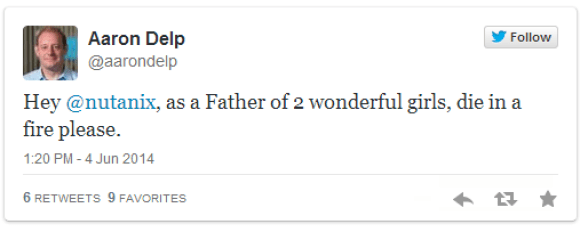
And a bunch of people on Twitter decided to fight inappropriate and unacceptable with the same. For example:

delpo

I was told on Twitter last night that “as a father” made this comment acceptable and respectable. Reminded me of the Jenny McCarthy “as a mother” fiasco a few years ago.

There was another tweet telling Nutanix execs that they’d better plan to work in fast food soon… but it looks like that was deleted since last night. If that’s the case, kudos to the poster for thinking better of it. And kudos to Howard Ting, Nutanix’s marketing SVP, for his creative response to that particular tweet.

I was also informed last night on Twitter that being disappointed with this sort of discourse meant I was “white-knighting,” and that an offensive ad campaign was perfect justification for immaturity in return.

The “white knight” term seems to be a popular way of dismissing any disagreement these days, although I hope that ceases to be the case someday. The fellow who made that accusation also accused me of not having a leg to stand on in my position because I stopped arguing with him. Sometimes you just can’t win.

So what’s your point?

Is it really too much to ask, that we keep the level of discourse a bit above what we’re allegedly (i.e. when it’s convenient or attractive or beneficial to us) trying to discourage in others? I don’t think so. As a father, as a technologist, as a human, I don’t think so. And if I’m in the Internet Minority on this, I’m disappointed but okay with it on my side.

I was impressed with a couple of the responses that came from people who missed the memo that they were expected (or even required) to be offended.

The blog post linked in that second tweet is a worthwhile read, although I expect it will be attacked promptly by Nutanix’s competitors and various other people who thrive on feeling outraged.

Nutanix could have done a milder campaign, and I understand they’ve done so already. Should they have started with that? Maybe. Would it have had the same impact? Probably not.

Would it have inconvenienced people looking for something to be outraged about, if they’d started with the new version? Not for long; this is the Internet as you know. Are there hidden (or not-so-hidden) agendas at work in the outrage? I’ll let you decide on that. Will anyone remember this in two months? Other than the folks who are now setting a calendar reminder to stir the pot in two months… probably not.excellent

But those of us with genuine concern about the impressions and realities of sexism, racism, and anythingelse-ism in tech need to take the high road whenever possible. Having a proven history of fertility and/or adoption does not exempt us from being civil. Nor does having a certification, a job, or a social media account. It may not be easy at all times, but change is rarely easy.

Didn’t you have a booth babe thought to share too?

Yes, thanks for reminding me while I still have my asbestos Speedo(tm) on. For that image, you’re welcome.

The blog linked above suggests that people should express outrage about promotional models or “booth babes.”

While I agree with that concern, and I don’t stop at booths that are overwhelmingly ‘babed, there’s a right way and a wrong way to address this issue as well.

I was disappointed to hear some folks at a recent professional trade expo cheerfully and proudly insulting the models themselves, some even claiming knowledge of the models’ alleged (unlikely) alternate professions and sexual proclivities. One or two people I overheard were even thrilled to insult a technologically aware person in a booth who simply made the mistake of being an attractive woman in tech.

The white-knight-decrying fellow can pipe up here if he likes, but insulting or attacking the models themselves–or anyone at a trade show for that matter–will not help your cause or do anyone else any good. Complain politely and professionally to the vendor in question if you want change to happen. Calling the model something you wouldn’t call a person in your family (or that you wouldn’t want someone in your family called) just puts you farther in the wrong than the vendor you’re trying to be outraged at.

Disclosure: I have some people I consider friends over at Nutanix, and I have been a guest at their office for Tech Field Day and just as a friend of the company. However, I don’t have any pigs in the fire on this market at the moment, and nobody has asked or enticed me to write this or given any consideration for this post. And I do have a relative who is a part-time promotional model, albeit in the fashion/club/media world, not the tech world.

Do you know the way to San Jose? Ease on down the road…

tl;dr: In just over 3 weeks I’ll be leaving Disney Interactive, joining Cisco Systems as a Consulting Systems Engineer in Connected Architectures.


Time for some time travel?


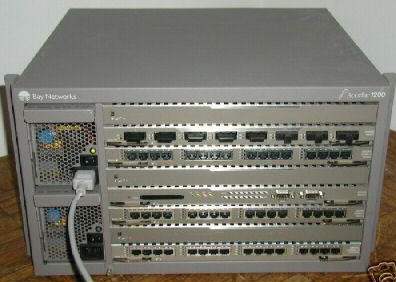
accelar_1200

Fifteen years ago I was working for Nortel Networks in their Ethernet Products Division (formerly the Rapid City Communications acquisition by Bay Networks). I was The Sysadmin for about 180 people at the peak, big data wasn’t even on the horizon yet, and if you’d asked me if I’d ever work with Cisco gear, I would have said “no” without hesitation. I wasn’t planning to become a network guy, and I cut my networking teeth on the Accelar line (now known as Avaya’s ERS 8600 etc) so I leaned that way for many years.

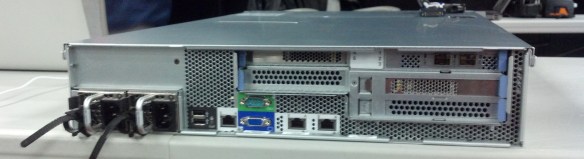
2011-12-22 cisco ucs c210

Fast forward to 2 1/2 years ago, when my boss at Disney asked “do you want to come to the datacenter and see some new servers?” I said yes, as I’ve been a hardware guy my entire career. I arrived at the datacenter to a pile of Cisco UCS C210 servers and the next 2 1/2 years would be spent wrangling C-Series servers into an environment for big data among other things, learning the quirks and questions of integrating with UCSM and communicating the platform out to my internal coworkers.

2014-05-19 rob-smh-clus

Just under a year ago, I got a message from Rachel Bakker of Cisco’s social media marketing team asking if I’d like to get involved with a new social media outreach program they were starting. My first thought was “do you know who I am?” And it wasn’t in the “I’m way too famous for this” sense, it’s the “do you have the wrong number?” sense. But I guess they knew who I was and wanted me to become one of the first 8 Cisco Champion program members. In the past 10 months, I’ve grown within the Cisco ecosystem and made great connections inside and outside Cisco through both the Cisco Champion program and my interactions with Cisco big data and UCS experts.

1200px-Cisco_Way_VTA_2165_09

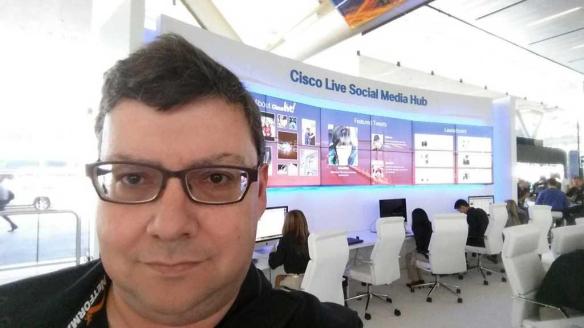
In the past week, I got invited to be in a a different track of Cisco Champions. This invitation capped off a long week of Cisco Live in San Francisco, followed by a long weekend moving across town to a bigger home. It’s overwhelming, but exciting. And a little bit scary.

In just under a month, I will be joining Cisco Systems as a Consulting Systems Engineer (CSE) in the Connected Architectures Engineering department. My job will be to work with independent software vendors (ISVs) and channel partners as well as internal Cisco teams to integrate Cisco solutions in Big Data environments.

So where do we go from here?

My three years at Disney Interactive have been productive and inspiring, but I find my future lies along the Tasman Drive road. What a long, strange trip it’s been.

https://www.youtube.com/watch?v=RH0EKivFRFY

This will be the first time in my professional career that I haven’t been a system administrator of some flavor, but I’ll still be pulling in my systems, infrastructure, architecture, and big picture skills for the adventure. And while I’ll be in the sales division, I won’t be at your door trying to sell you hardware and SmartNet contracts (unless I lose a bet or something).


I’ll also, unfortunately, be off the roster of prospective Tech Field Day delegates, although Stephen Foskett has told me that I’m always welcome at the parties. If invited to participate in roundtables, I’d be happy to join. And if Tech Field Day ever does a Big Data Field Day, I might end up on the other side of the table.


And I plan to keep blogging, experimenting with POHO in all its flavors, and maybe eventually getting my own Cisco UCS gear at home (or more properly, in the garage, for domestic tranquility reasons). So keep following me here, on Twitter as @gallifreyan, and anywhere else you find me. I won’t be alone, dancing, you know it baby….